Species details
Pale milkcap
Lactarius pallidus
Conditional / expert preparation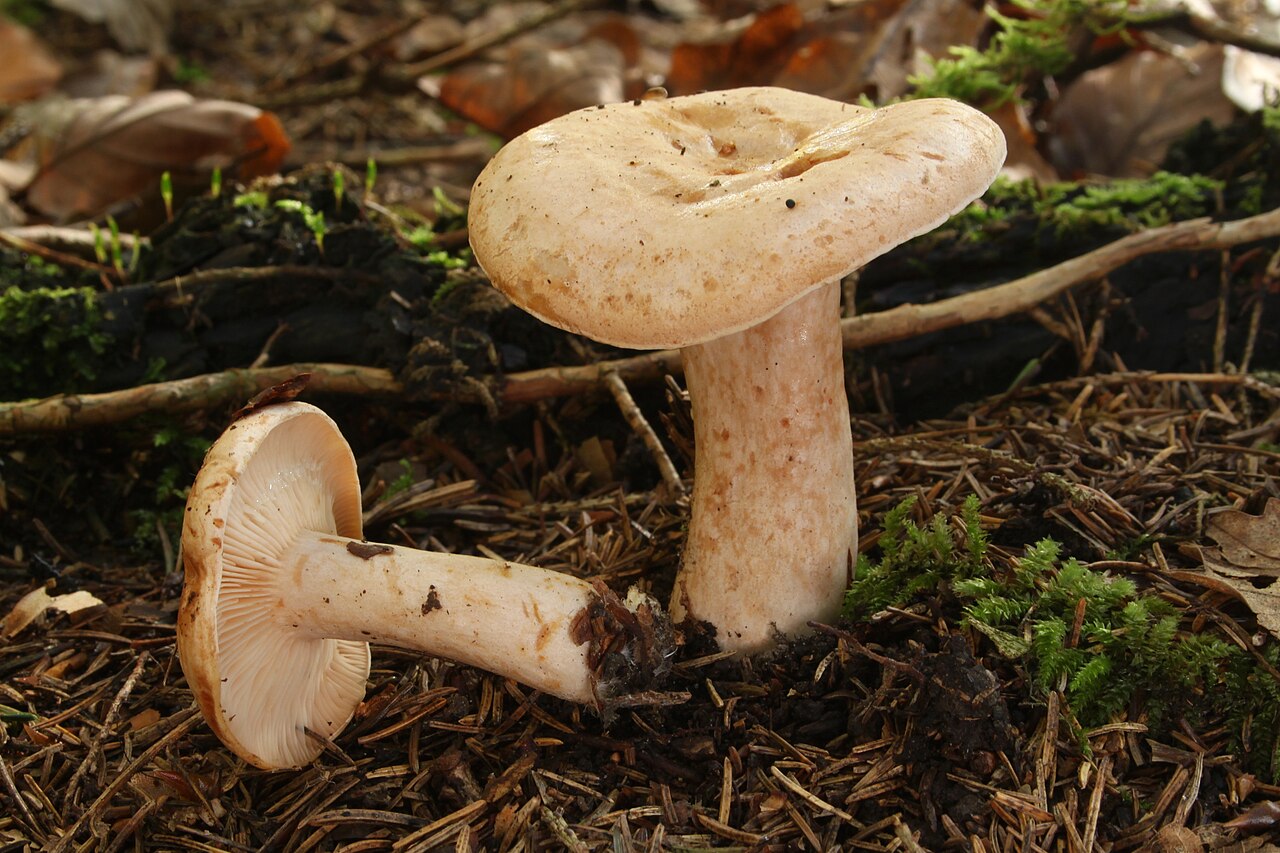
Photo: Holger Krisp · CC BY-SA 4.0 · Photo source · License

Description
A large pale pinkish-brown milkcap with a smooth very slimy cap when wet and white latex that does not change colour.
Identification features
The cap is fleshy, initially convex, later flattened and depressed, with the margin remaining inrolled for a long time. Gills start whitish and become pale brownish. The stem is pale yellowish, smooth and narrows toward the base.
Identification checklist
Check the pale smooth cap that becomes very slimy when wet and lacks strong zoning, the long-inrolled margin, pale stem and abundant white latex that does not change colour. Beech and calcareous soil are useful additional clues.
Detailed features
- Cap
- A large pale pinkish-brown milkcap with a smooth cap that becomes very slimy in damp weather and white milk that does not change colour.
- Hymenophore
- Gills start whitish and become pale brownish.
- Stem
- The stem is pale yellowish, smooth and narrows toward the base.
- Flesh
- Whitish to pale yellowish and relatively firm.
- Smell
- The smell is not strongly distinctive.
- Spore print
- Cream to pale cream.
Habitat
Mainly on calcareous soils under beech; from early summer to autumn.
Fruiting period
June, July, August, September, October
Ecology
- Trophic mode
- Mycorrhizal
- Host trees
- Beech (Fagus)
- Substrate
- Forest soil
- Soil
- Calcareous
- Notes
- Mycorrhizal species. Mainly on calcareous soils under beech; from early summer to autumn.
How to separate similar species
Other pale milkcaps differ in habitat, gill density, stem surface and latex reactions. Also observe colour changes at damaged areas after several minutes.
Similar species
- Lactarius musteus
- Beech milkcap (Lactarius blennius)
- Lactarius species
Interesting facts
Did you know? Its pale colouring and association with beech are useful clues, but several characters must be combined when identifying milkcaps.