Species details
Hooded false morel
Gyromitra infula
Poisonous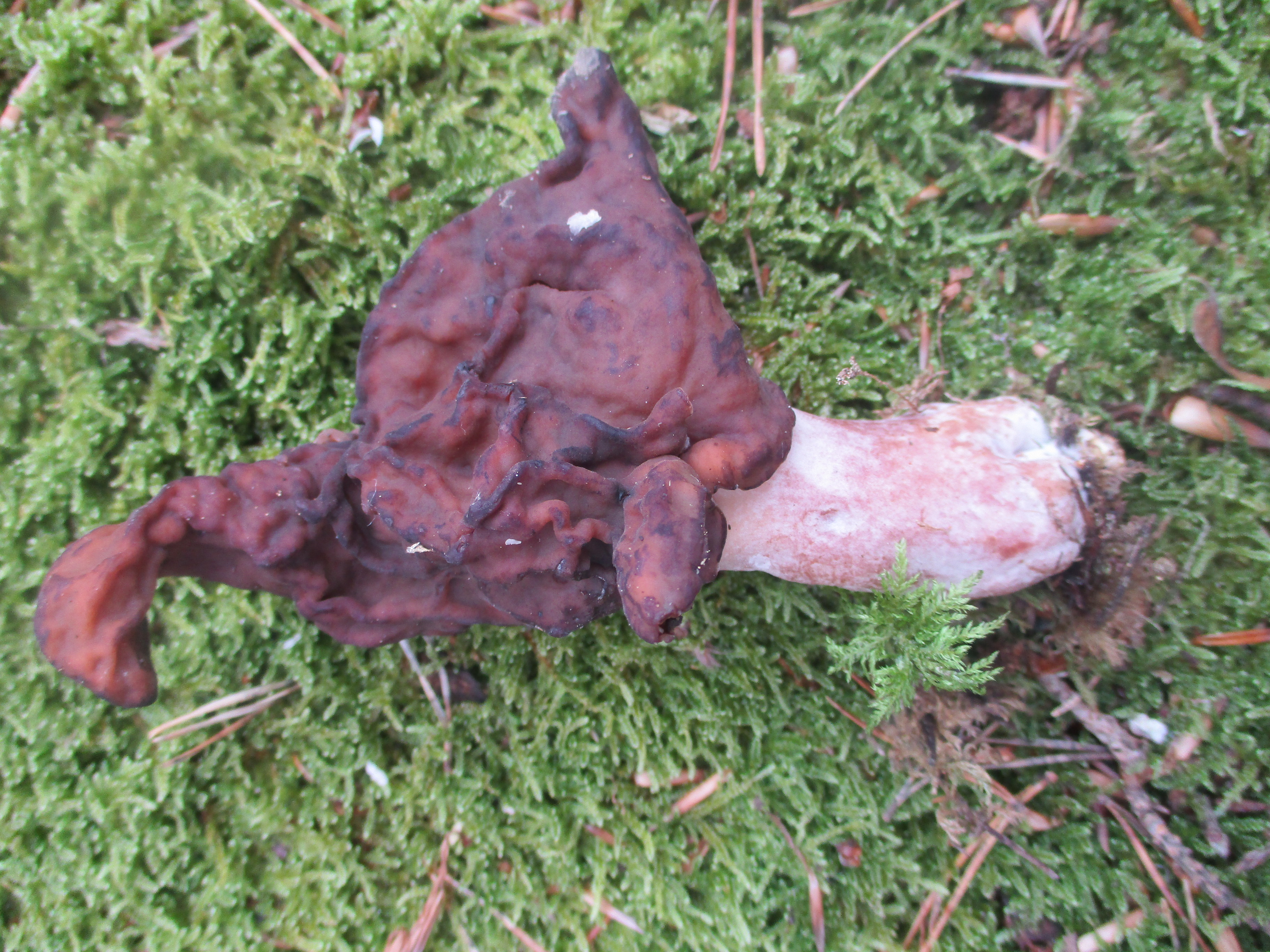
Photo: Adrien BENOIT à la GUILLAUME · CC BY-SA 4.0 · Photo source · License
_01.jpg)
Description
An autumn reddish-brown false morel with a horned or saddle-folded head that contains dangerous gyromitrin.
Identification features
Head irregularly saddle- to horn-shaped, reddish-brown to chestnut, with relatively shallow folds. Stem is paler, cylindrical to compressed and may be longitudinally wrinkled. Flesh is thin and brittle.
Identification checklist
Check the autumn season, reddish-brown saddle-horned head with relatively shallow folds and paler stem.
Detailed features
- Stem
- Stem is paler, cylindrical to compressed and may be longitudinally wrinkled.
- Flesh
- Flesh is thin and brittle.
Habitat
Grows in autumn singly or in groups in damp places in coniferous and deciduous woodland, beside paths and on burnt ground; rare.
Fruiting period
September, October, November
Ecology
- Soil
- Moist
- Notes
- Grows in autumn singly or in groups in damp places in coniferous and deciduous woodland, beside paths and on burnt ground; rare.
How to separate similar species
Gyromitra esculenta mainly grows in spring and has a more brain-like folded head. Both species are dangerous; a photograph is not a basis for deciding edibility.
Similar species
- False morel (Gyromitra esculenta) DANGEROUS
- Helvella species
- Gyromitra species