Species details
Grey false bolete
Boletopsis grisea
Conditional / expert preparation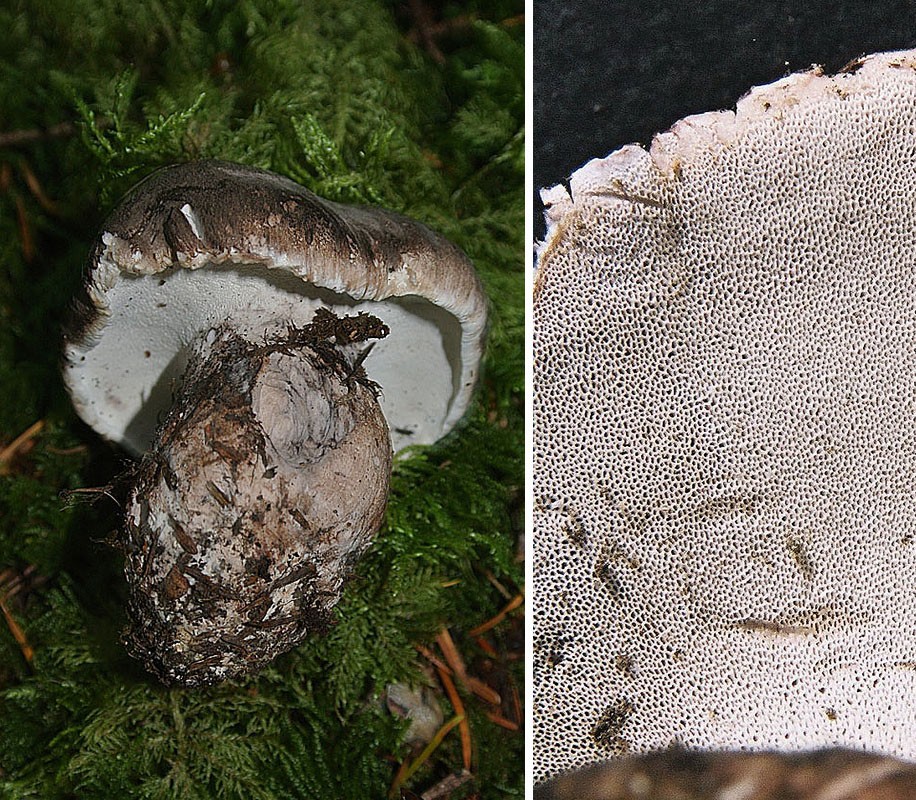
Photo: Dick Culbert from Gibsons, B.C., Canada · CC BY 2.0 · Photo source · License

Description
A fleshy grey pore fungus with a short firm stem, mainly under pine; young specimens are listed as edible by the source.
Identification features
The cap is 5–13 cm or larger, grey to grey-brown, dry and smooth. The pore surface is white then grey with fine pores. The stem is short, greyish, and often eccentric.
Identification checklist
Check the dry grey cap, white-to-grey pore surface, short firm stem, and pine habitat. Bruised areas may darken.
Detailed features
- Cap
- The cap is 5–13 cm or larger, grey to grey-brown, dry and smooth.
- Stem
- The stem is short, greyish, and often eccentric.
Size
- Cap diameter
- 5–13 cm
Habitat
Grows mainly with pine on nutrient-poor acidic soils, often in upland areas, from late autumn into early winter.
Fruiting period
October, November, December, January
Ecology
- Host trees
- Pine (Pinus)
- Soil
- Acidic
- Notes
- Grows mainly with pine on nutrient-poor acidic soils, often in upland areas, from late autumn into early winter.
How to separate similar species
Similar pore fungi require checking pores, bruising changes, and habitat. Old specimens are harder to identify reliably.
Similar species
- Black false bolete (Boletopsis leucomelaena)
- Albatrellus species