Species details
Gilded bolete
Aureoboletus gentilis
Conditional / expert preparation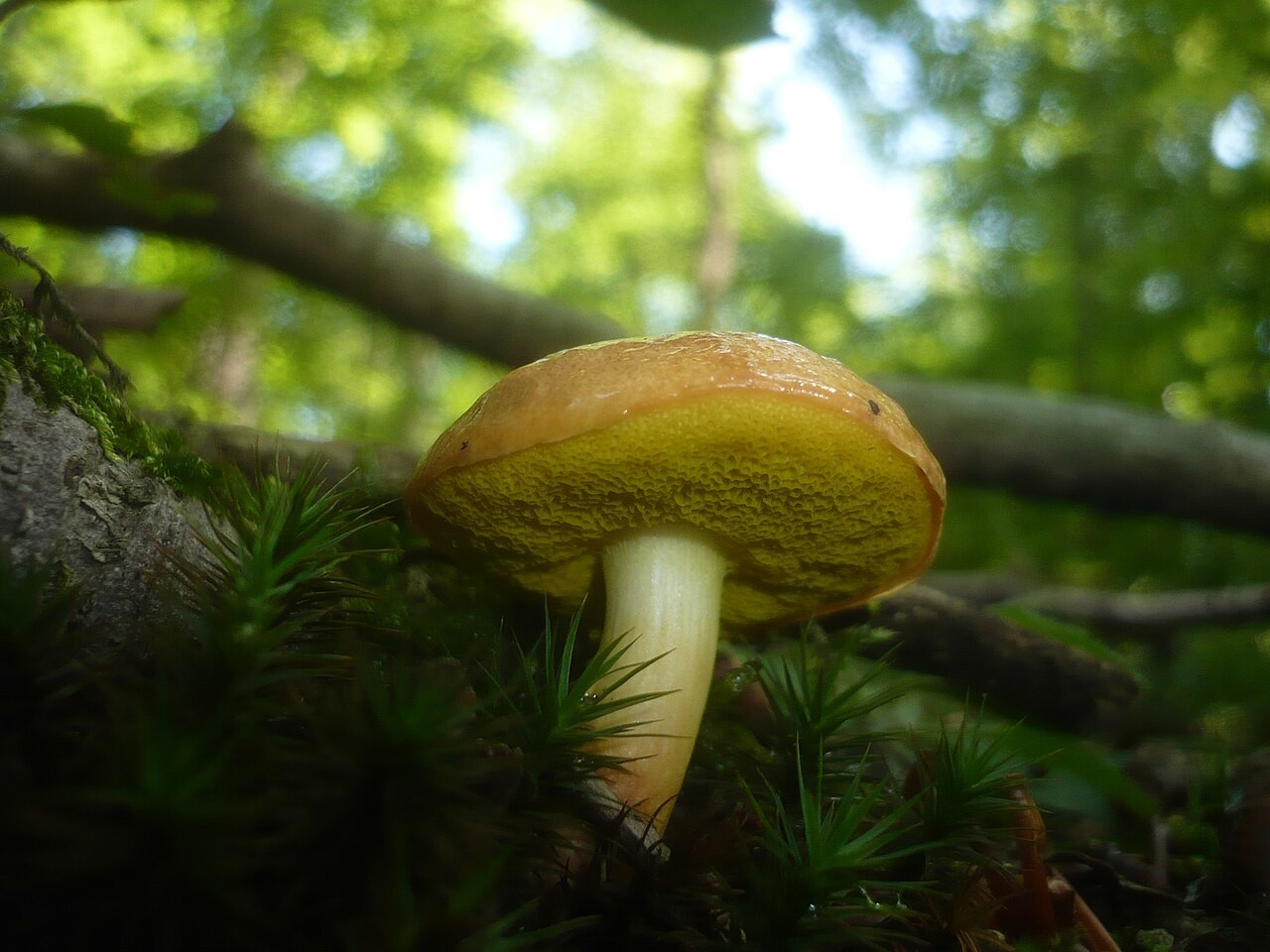
Photo: Gerhard Koller (Gerhard) · CC BY-SA 3.0 · Photo source · License

Description
A small pink- to reddish-brown bolete with a sticky cap and vivid golden-yellow pore surface; protected in Slovenia.
Identification features
The cap is 2–5 cm wide, pink to reddish-brown, initially velvety and sticky when wet. Pores are striking golden yellow and may become slightly olive-green when touched. The stem is slender, yellowish to pale pink.
Identification checklist
Check the small size, pink-brown sticky cap and especially the vivid golden-yellow pores. Do not collect because of its protected status.
Detailed features
- Cap
- The cap is 2–5 cm wide, pink to reddish-brown, initially velvety and sticky when wet.
- Hymenophore
- Pores are striking golden yellow and may become slightly olive-green when touched.
- Stem
- The stem is slender, yellowish to pale pink.
Size
- Cap diameter
- 2–5 cm
Habitat
Grows in deciduous woodland, most often with oak, in summer and early autumn; rare.
Fruiting period
June, July, August, September, October
Ecology
- Host trees
- Oak (Quercus)
- Notes
- Grows in deciduous woodland, most often with oak, in summer and early autumn; rare.
How to separate similar species
Other small boletes can have yellow pores, but the combination of a sticky pink-brown cap and golden-yellow pore surface is highly distinctive.
Similar species
- Aureoboletus moravicus
- Xerocomellus species
- Ruby bolete (Hortiboletus rubellus)
Conservation
- Protected species
- Yes
- Red list
- R – rare species
- Notes
- The species is legally protected in Slovenia under the regulation on protected wild fungi. On the Slovenian Red List: R – rare species.