Species details
Fragrant funnel
Clitocybe fragrans
Poisonous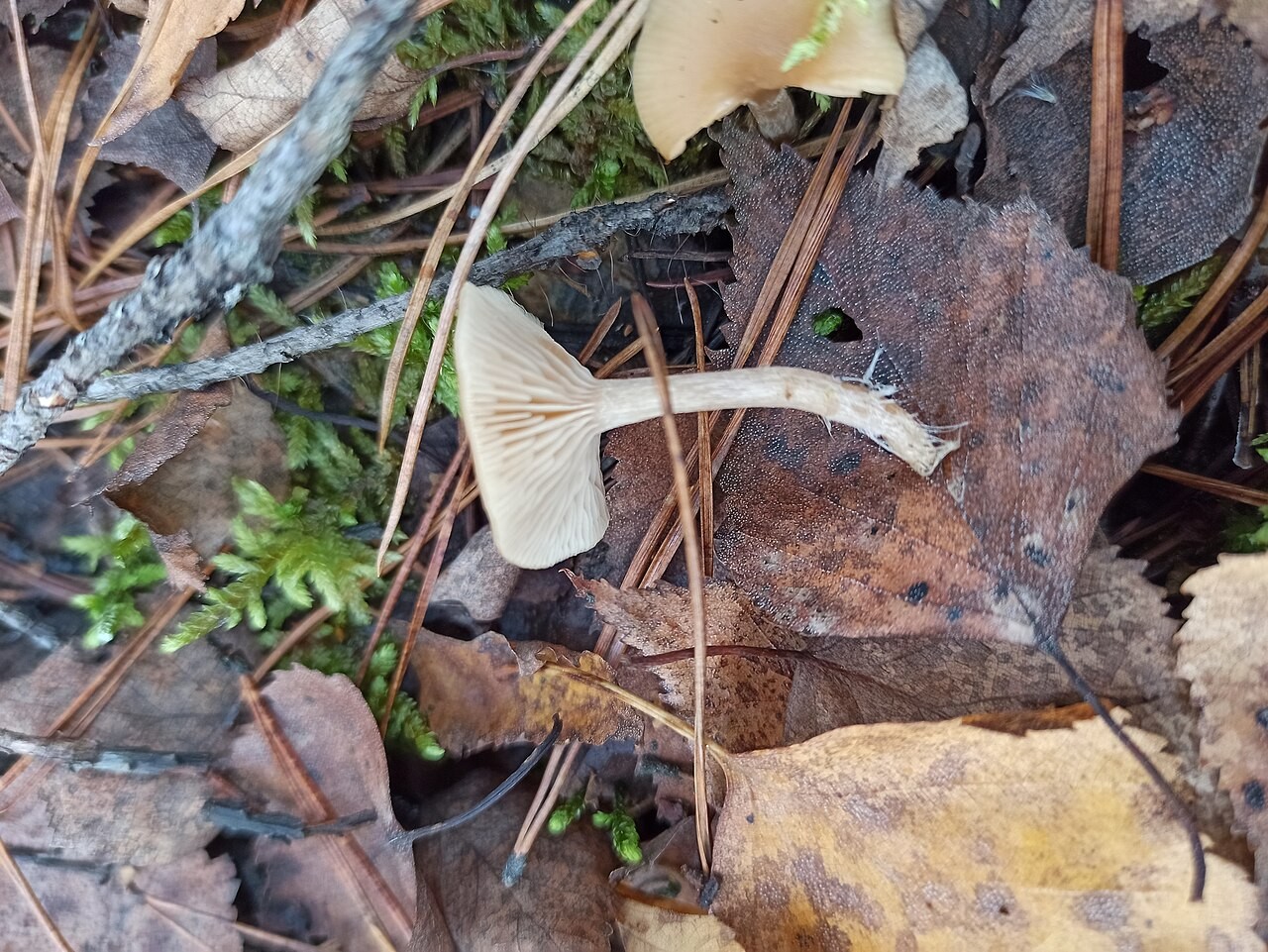
Photo: Nadezhda Kiseleva · CC BY 4.0 · Photo source · License

Description
A small pale cream to grey-brown funnel with a distinct aniseed smell and hygrophan, striate margin.
Identification features
The small cap is grey-brown and translucently striate when wet, becoming creamier when dry. Gills are pale and slightly decurrent. The stem is thin with whitish basal mycelium.
Identification checklist
Check the small hygrophan cap, translucently striate margin, and strong aniseed smell. Small pale funnels cannot be safely identified by smell alone.
Detailed features
- Cap
- The small cap is grey-brown and translucently striate when wet, becoming creamier when dry.
- Hymenophore
- Gills are pale and slightly decurrent.
- Stem
- The stem is thin with whitish basal mycelium.
- Smell
- Strong sweetish anise smell.
- Spore print
- Faintly pinkish-cream.
Size
- Cap diameter
- 1,5–5 cm
- Stem height
- 2,5–6,5 cm
Habitat
Grows with conifers and broadleaved trees from late summer to late autumn.
Fruiting period
August, September, October, November
Ecology
- Trophic mode
- Saprotrophic
- Substrate
- Leaf litter, Forest soil
- Notes
- Grows with conifers and broadleaved trees from late summer to late autumn.
How to separate similar species
Clitocybe odora is usually more blue-green. Other pale funnels can be very poisonous, so great caution is required.
Similar species
- Aniseed funnel (Clitocybe odora)
- Frosted funnel (Clitocybe phyllophila) DANGEROUS
C. phyllophila is highly poisonous to potentially deadly and is usually larger and whiter. Never identify small pale Clitocybe by smell alone.
- Ivory funnel (Clitocybe dealbata) DANGEROUS
C. dealbata is deadly poisonous and usually lacks the characteristic anise smell.
Interesting facts
Did you know? Check the small hygrophan cap, translucently striate margin, and strong aniseed smell. Small pale funnels cannot be safely identified by smell alone.