Species details
Fechtner's bolete
Butyriboletus fechtneri
Conditional / expert preparation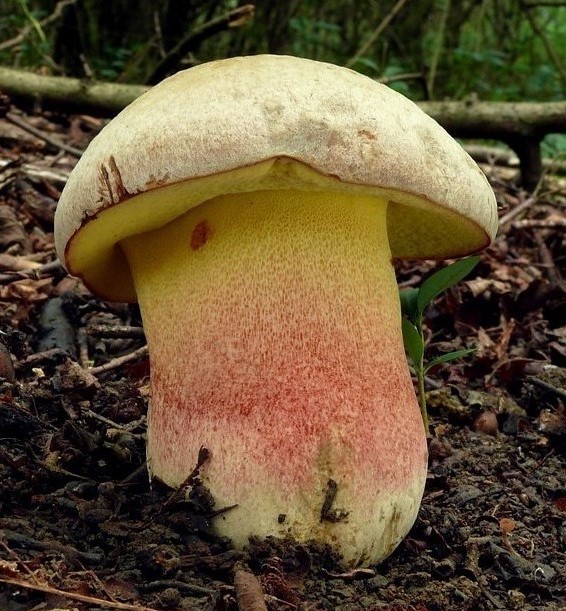
Photo: František ŠARŽÍK · CC BY 3.0 · Photo source · License

Description
A robust bolete with a pale grey to silvery cap, yellow pores, and a yellow stem with a reddish zone.
Identification features
The cap is pale grey to silvery, dry, and velvety. Pores are yellow and may blue when bruised. The stem is yellow, finely reticulate, and often reddish in the middle.
Identification checklist
Check the pale silvery cap, yellow pores, finely reticulate yellow stem with a reddish zone, and slight blue staining. Examine the stem base too.
Detailed features
- Cap
- The cap is pale grey to silvery, dry, and velvety.
- Hymenophore
- Pores are yellow and may blue when bruised.
- Stem
- The stem is yellow, finely reticulate, and often reddish in the middle.
- Smell
- No distinctive smell.
- Spore print
- Olive-brown.
Size
- Cap diameter
- 6–15 cm
- Stem height
- 5–10 cm
- Stem diameter
- 2–6 cm
Habitat
Mycorrhizal mainly with broadleaved trees on warm calcareous soils, especially oak and beech, in summer and early autumn.
Fruiting period
June, July, August, September
Ecology
- Trophic mode
- Mycorrhizal
- Host trees
- Oak (Quercus), Beech (Fagus)
- Substrate
- Forest soil
- Soil
- Calcareous
- Notes
- Mycorrhizal mainly with broadleaved trees on warm calcareous soils, especially oak and beech, in summer and early autumn.
How to separate similar species
Butyriboletus appendiculatus is usually browner, while Caloboletus calopus has stronger red reticulation and bitter flesh. Colour alone is insufficient.
Similar species
Interesting facts
Did you know? Check the pale silvery cap, yellow pores, finely reticulate yellow stem with a reddish zone, and slight blue staining. Examine the stem base too.