Species details
Depilated bolete
Hemileccinum depilatum
Traditionally edible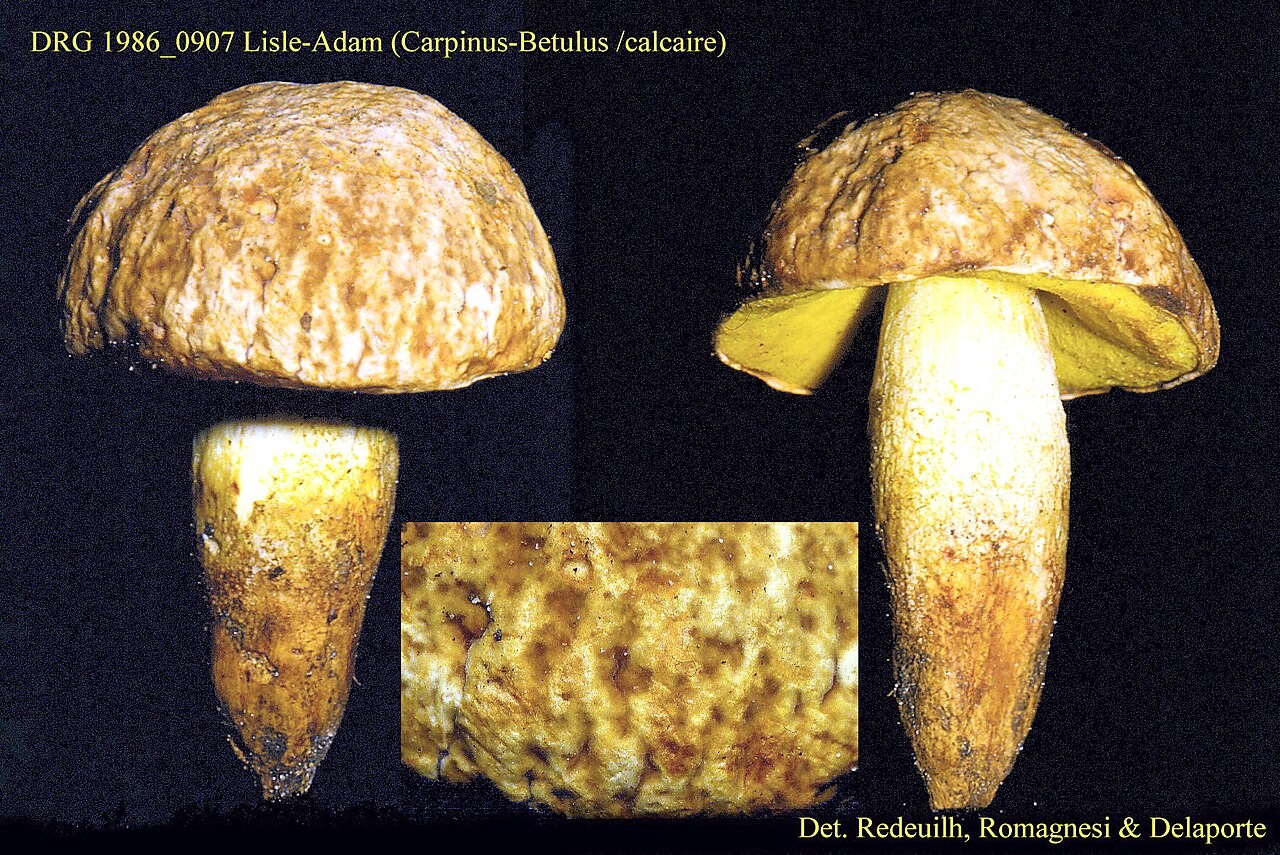
Photo: Svencapoeira · CC BY-SA 4.0 · Photo source · License

Description
A firm pale to brick-brown bolete with a characteristically pitted, wrinkled cap surface, yellow non-blueing pores and a reticulate stem.
Identification features
The cap is 6–15 cm wide, pale brown to brick-coloured and covered with small pits and bumps. Pores are yellowish to olive-yellow and usually do not blue. The pale stem often has a reddish zone and reticulation.
Identification checklist
The pitted, wrinkled cap is the most characteristic feature. Also check yellow pores without strong blue staining and the pale reticulate stem.
Detailed features
- Cap
- The cap is 6–15 cm wide, pale brown to brick-coloured and covered with small pits and bumps.
- Hymenophore
- Pores are yellowish to olive-yellow and usually do not blue.
- Stem
- The pale stem often has a reddish zone and reticulation.
Size
- Cap diameter
- 6–15 cm
Habitat
Grows in warm deciduous woodland on calcareous soils, mainly with hornbeam and other broadleaved trees, in summer and autumn.
Fruiting period
June, July, August, September, October
Ecology
- Soil
- Calcareous
- Notes
- Grows in warm deciduous woodland on calcareous soils, mainly with hornbeam and other broadleaved trees, in summer and autumn.
How to separate similar species
Hemileccinum impolitum usually has a smoother cap. In boletes, also check odour, reticulation, colour changes and habitat.