Species details
Deceiver
Laccaria laccata
Traditionally edible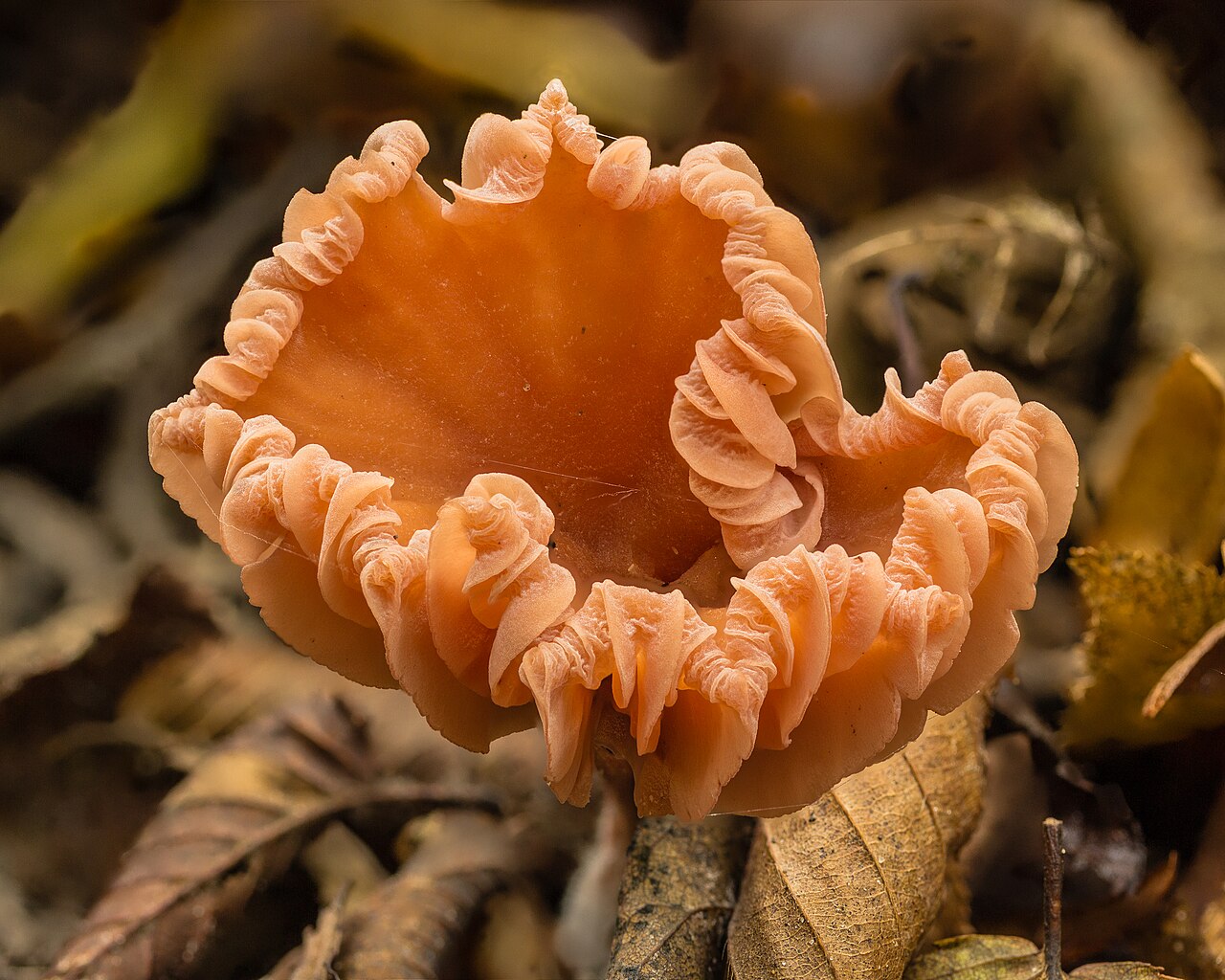
Photo: Dominicus Johannes Bergsma. · CC BY-SA 4.0 · Photo source · License
._Locatie,_Paddenstoelenreservaat._14-10-2025._(d.j.b).jpg)
Description
A small to medium pinkish-brown mushroom whose colours fade strongly; thick, widely spaced gills are especially characteristic.
Identification features
The initially convex cap often flattens and becomes centrally depressed; the stem is fibrous and similarly coloured, with a white spore print.
Identification checklist
Check the entire fruitbody for identification. A small to medium pinkish-brown mushroom whose colours fade strongly; thick, widely spaced gills are especially characteristic. The initially convex cap often flattens and becomes centrally depressed; the stem is fibrous and similarly coloured, with a white spore print. Typical habitat: In many woodland types, along paths and woodland edges, often in groups from summer to late autumn.
Detailed features
- Cap
- A small to medium-sized pinkish-brown mushroom whose colours fade strongly; the thick, widely spaced gills are especially characteristic.
- Hymenophore
- The initially convex cap often flattens and becomes depressed in the centre; the stem is fibrous and similarly coloured, and the spore print is white.
- Flesh
- Pinkish-brown and relatively tough.
- Smell
- Mild spicy smell.
- Spore print
- White.
Size
- Cap diameter
- 2–5 cm
- Stem height
- 3–10 cm
- Stem diameter
- 0,3–0,7 cm
Habitat
In many woodland types, along paths and woodland edges, often in groups from summer to late autumn.
Fruiting period
June, July, August, September, October, November
Ecology
- Substrate
- Forest soil
- Notes
- In many woodland types, along paths and woodland edges, often in groups from summer to late autumn.
How to separate similar species
Compare especially with these similar species: Laccaria amethystina, Laccaria bicolor, Laccaria species. Check the entire fruitbody, spore-bearing surface, stem, texture, changes after bruising and habitat. A single feature or photograph is not enough for reliable identification.
Similar species
- Amethyst deceiver (Laccaria amethystina)
- Laccaria bicolor
- Laccaria species
Interesting facts
Did you know? The cap fades strongly as it dries, so the thick, widely spaced gills are also important for identification.