Species details
Common mazegill
Cerioporus mollis
Inedible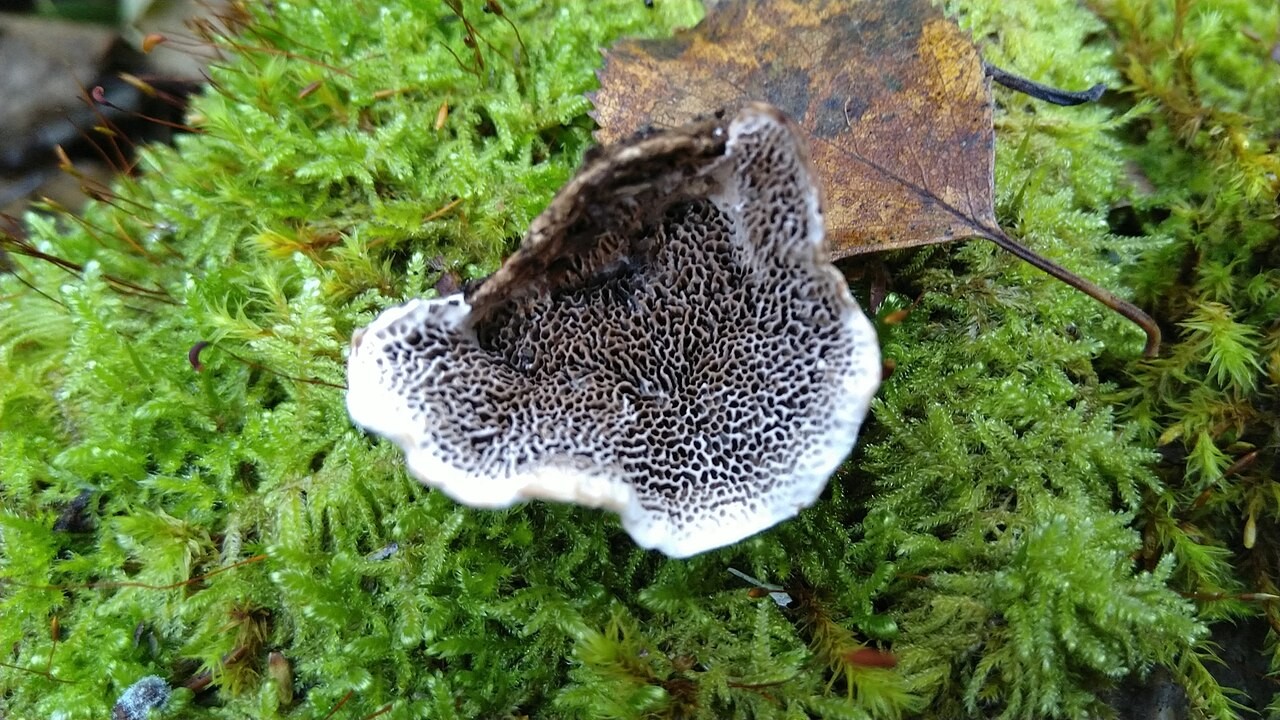
Photo: Mikko Heikkinen · CC BY 4.0 · Photo source · License

Description
A thin, irregularly shaped polypore only a few millimetres thick that spreads across dead deciduous wood.
Identification features
The fruitbody starts as an irregular flattened patch and later the margin may lift. The surface is ochre to brown and darkens with age; pores are irregular, elongated to slit-like. The flesh is light brown and tough.
Identification checklist
Identify the thin brown fruitbody on dead deciduous wood with irregular elongated or slit-like pores.
Detailed features
- Hymenophore
- The surface is ochre to brown and darkens with age; pores are irregular, elongated to slit-like.
- Flesh
- The flesh is pale brown and tough.
Habitat
Grows year-round on dead and fallen deciduous wood; common.
Fruiting period
January, February, March, April, May, June, July, August, September, October, November, December
Ecology
- Substrate
- Wood
- Notes
- Grows year-round on dead and fallen deciduous wood; common.
How to separate similar species
It may resemble other resupinate or thin polypores. Pore shape and substrate help distinguish it.