Species details
Black-foot polypore
Picipes badius
Inedible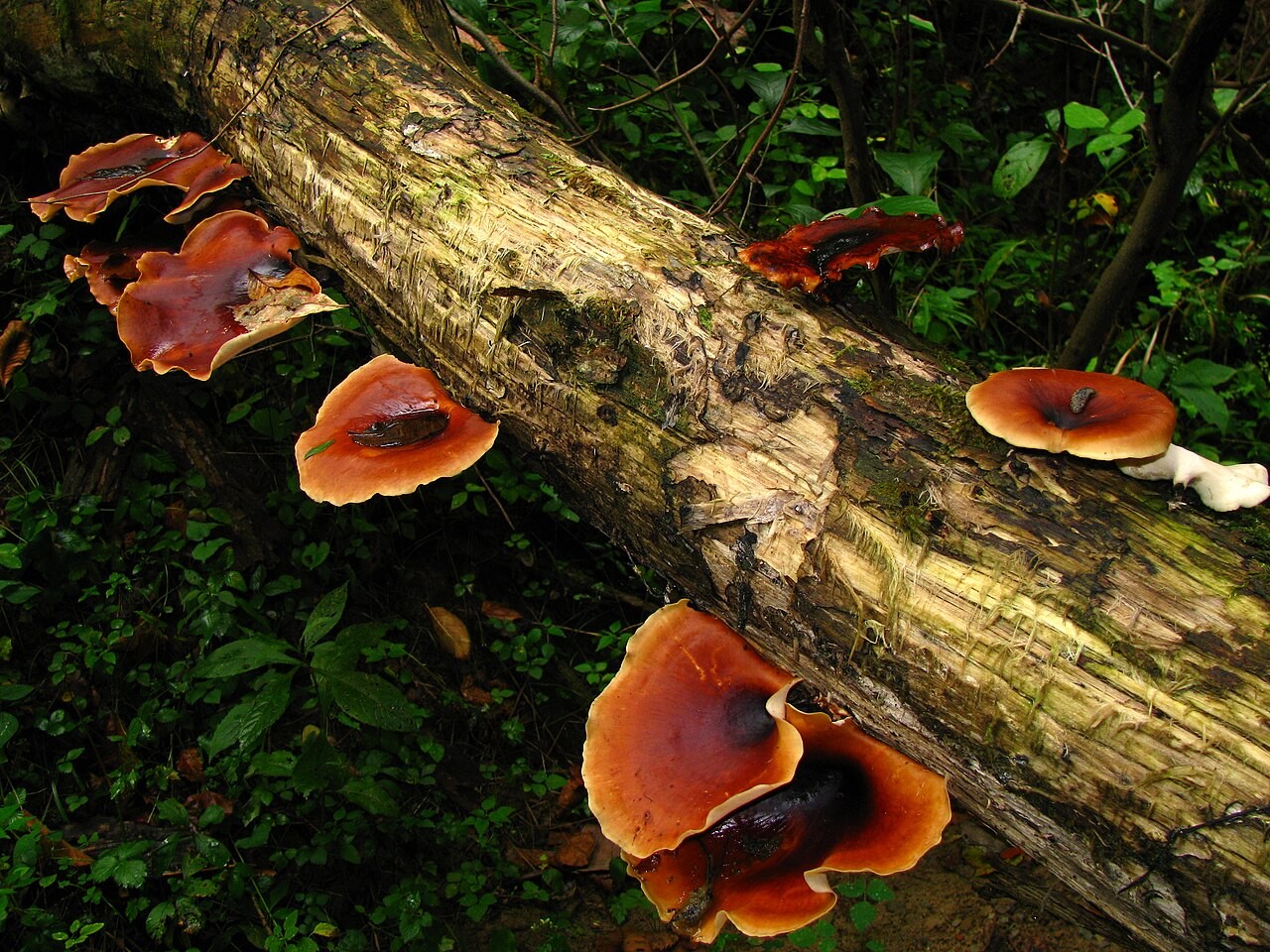
Photo: Dan Molter · CC BY-SA 3.0 · Photo source · License

Description
A thin glossy chestnut-brown polypore with a characteristic dark-brown to black lower stem.
Identification features
Cap up to about 20 cm wide, fan- to funnel-shaped, smooth and glossy chestnut to reddish-brown. Underside is whitish and porous; the short stem becomes dark brown to black.
Identification checklist
Check the glossy chestnut-brown cap, small pale pores and strongly darkened stem base.
Detailed features
- Cap
- Cap up to about 20 cm wide, fan- to funnel-shaped, smooth and glossy chestnut to reddish-brown.
- Hymenophore
- Underside is whitish and porous; the short stem becomes dark brown to black.
- Stem
- Underside is whitish and porous; the short stem becomes dark brown to black.
Size
- Cap diameter
- ≤ 20 cm
Habitat
Grows from spring to autumn on dead and occasionally living parts of hardwood trees.
Fruiting period
April, May, June, July, August, September, October
Ecology
- Notes
- Grows from spring to autumn on dead and occasionally living parts of hardwood trees.
How to separate similar species
Cerioporus leptocephalus is usually paler and less glossy; cap colour and shape differ despite the dark stem base.
Similar species
- Blackfoot polypore (Cerioporus leptocephalus)
- Polyporus species
- Picipes species