Species details
Birch knight
Tricholoma fulvum
Conditional / expert preparation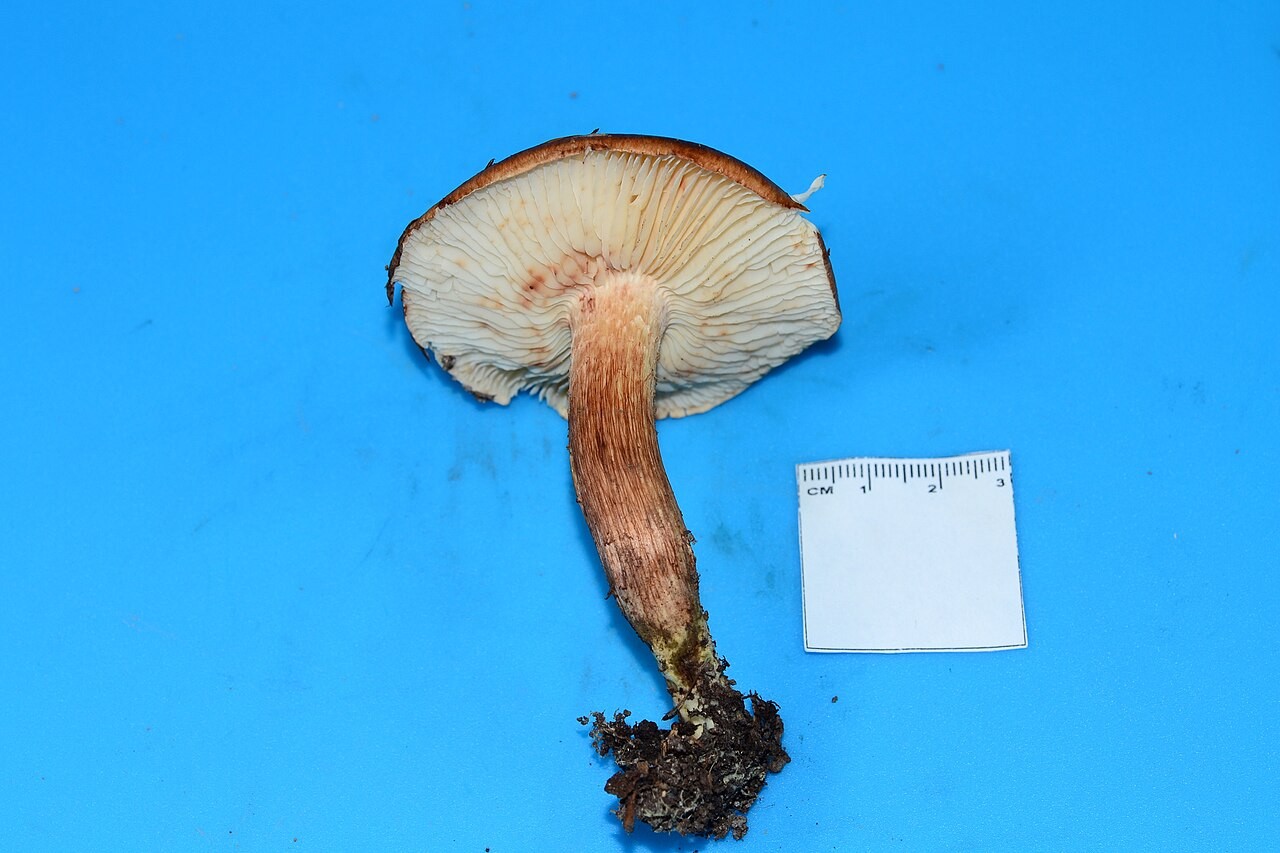
Photo: Strobilomyces · CC BY-SA 3.0 · Photo source · License

Description
A brownish Tricholoma with a sticky cap, yellowish gills, and characteristic association with birch.
Identification features
The cap is yellow-brown to reddish-brown, sticky when wet, and radially fibrous. Gills start pale and become yellowish to brown-spotted. The stem is pale and browner toward the base.
Identification checklist
Check the brown sticky cap, yellowing gills, and birch association. With brown Tricholoma, also compare smell, flesh, and stem colour.
Detailed features
- Cap
- The cap is yellow-brown to reddish-brown, sticky when wet, and radially fibrous.
- Hymenophore
- Gills start pale and become yellowish to brown-spotted.
- Stem
- The stem is pale and browner toward the base.
- Smell
- No distinctive smell.
Habitat
Mycorrhizal mainly with birch in woodland, parks, and woodland edges, in summer and autumn.
Fruiting period
August, September, October, November
Ecology
- Trophic mode
- Mycorrhizal
- Host trees
- Birch (Betula)
- Substrate
- Forest soil
- Notes
- Mycorrhizal mainly with birch in woodland, parks, and woodland edges, in summer and autumn.
How to separate similar species
Tricholoma pseudonictitans and other brown knights may be inedible or poisonous. Tree association helps but is not the only feature.
Similar species
- Tricholoma pseudonictitans
- Matt knight (Tricholoma imbricatum)
- Tricholoma albobrunneum
Interesting facts
Did you know? Check the brown sticky cap, yellowing gills, and birch association. With brown Tricholoma, also compare smell, flesh, and stem colour.