Species details
Aniseed bracket
Gloeophyllum odoratum
Inedible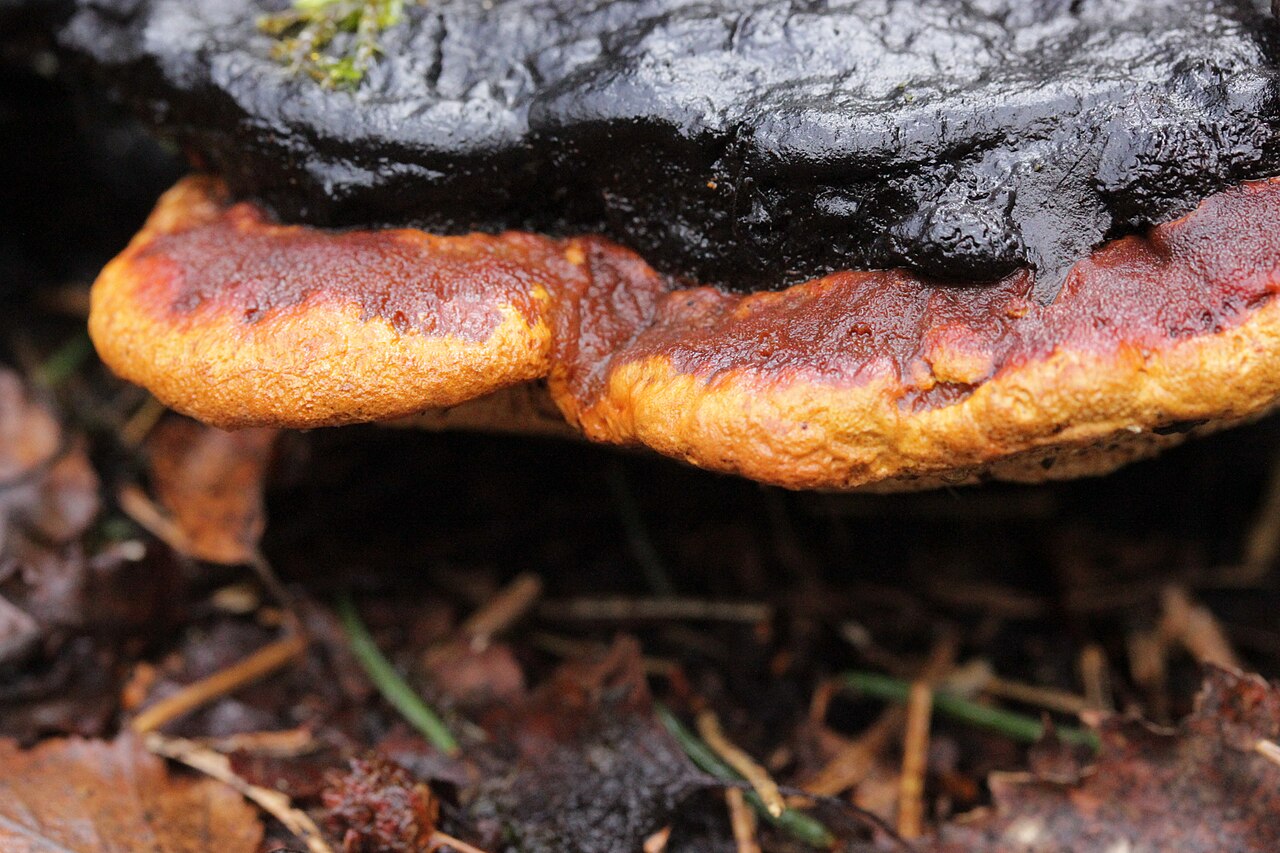
Photo: Björn S... · CC BY-SA 2.0 · Photo source · License
.jpg)
Description
A thick brown bracket fungus of irregular shape, fresh specimens often having a noticeable sweet or anise-like smell.
Identification features
The upper surface is rough and zoned, while the underside has elongated to maze-like pores; old flesh becomes corky and hard.
Identification checklist
Check the entire fruitbody for identification. A thick brown bracket fungus of irregular shape, fresh specimens often having a noticeable sweet or anise-like smell. The upper surface is rough and zoned, while the underside has elongated to maze-like pores; old flesh becomes corky and hard. Typical habitat: Mainly on stumps and dead conifer wood, often spruce; the hard fruitbodies may remain visible throughout the year.
Detailed features
- Cap
- A thick brown bracket fungus of irregular shape; fresh fruitbodies often have a pronounced sweet or anise-like smell.
- Hymenophore
- The upper surface is rough and zoned, while the underside has elongated to maze-like pores; old flesh is corky and hard.
- Flesh
- Brownish, corky and hard in old fruitbodies.
- Smell
- Distinctly sweetish and anise-like.
- Spore print
- White.
Size
- Cap diameter
- 8–20 cm
Habitat
Mainly on stumps and dead conifer wood, often spruce; the hard fruitbodies may remain visible throughout the year.
Fruiting period
January, February, March, April, May, June, July, August, September, October, November, December
Ecology
- Trophic mode
- Saprotrophic
- Host trees
- Spruce (Picea)
- Substrate
- Dead wood, Stumps
- Notes
- Saprotrophic species. Mainly on stumps and dead conifer wood, often spruce; the hard fruitbodies may remain visible throughout the year.
How to separate similar species
Compare especially with these similar species: Gloeophyllum sepiarium, Fomitopsis pinicola. Check the entire fruitbody, spore-bearing surface, stem, texture, changes after bruising and habitat. A single feature or photograph is not enough for reliable identification.
Similar species
Interesting facts
Did you know? In fresh fruitbodies, the unusually strong aromatic smell can be a more useful clue than colour alone.