Species details
Surprise webcap
Cortinarius semisanguineus
Poisonous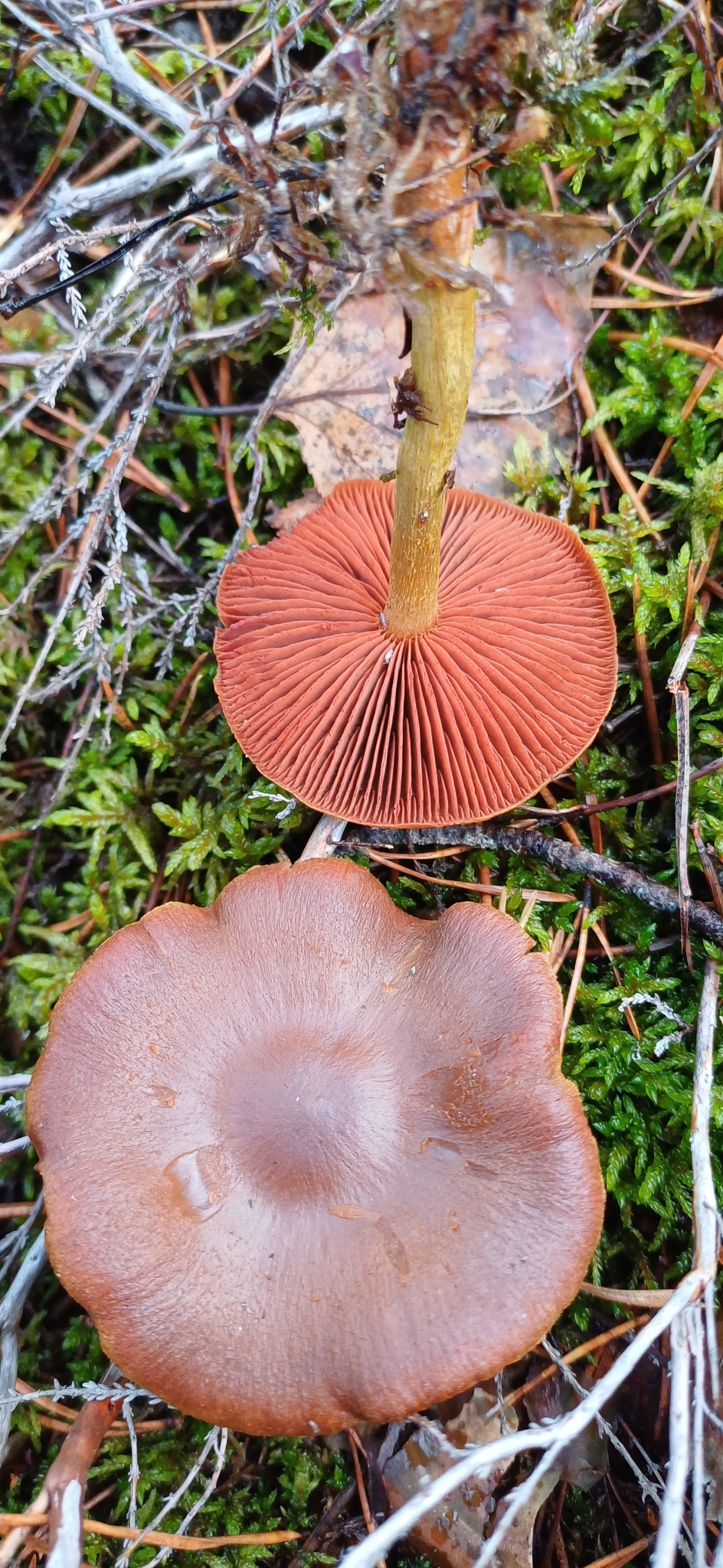
Photo: Mikko Heikkinen · CC BY 4.0 · Photo source · License

Description
A medium-sized webcap with an olive to ochre-brown cap and striking blood-red young gills.
Identification features
The cap is dry, finely fibrillose and often broadly umbonate. Gills begin blood red and become brown as spores mature. The stem is slender, yellowish to olive-brown, with fleeting cortina remnants.
Identification checklist
The key combination is a rather plain olive-brown cap above vivid blood-red gills. Also check the cobweb-like cortina and rusty-brown spore print. A cap-only view is insufficient.
Detailed features
- Cap
- A medium-sized webcap with an olive to ochre-brown cap and striking blood-red young gills.
- Hymenophore
- Gills begin blood red and become brown as spores mature.
- Stem
- The stem is slender, yellowish to olive-brown, with fleeting cortina remnants.
- Flesh
- Yellowish to olive-brown; gill and cap colours are more useful for identification.
- Smell
- No reliable distinctive smell for field identification.
- Spore print
- Rust-brown.
Habitat
Mycorrhizal in coniferous and mixed woodland, especially with spruce and pine and sometimes birch; mainly in autumn.
Fruiting period
August, September, October, November
Ecology
- Trophic mode
- Mycorrhizal
- Host trees
- Spruce (Picea), Pine (Pinus), Birch (Betula)
- Substrate
- Forest soil
- Notes
- Mycorrhizal species. Mycorrhizal in coniferous and mixed woodland, especially with spruce and pine and sometimes birch; mainly in autumn.
How to separate similar species
Bloodred webcap is much redder over the whole fruitbody. Other red-gilled Cortinarius species can be very similar, so photograph-only identification is unreliable in this group.
Similar species
- Blood-red webcap (Cortinarius sanguineus) DANGEROUS
- Cortinarius purpureus
- Cortinarius ominosus
Interesting facts
Did you know? The blood-red young gills contrast strongly with the more yellow-brown cap and stem.