Species details
Stinking dapperling
Lepiota cristata
Deadly poisonous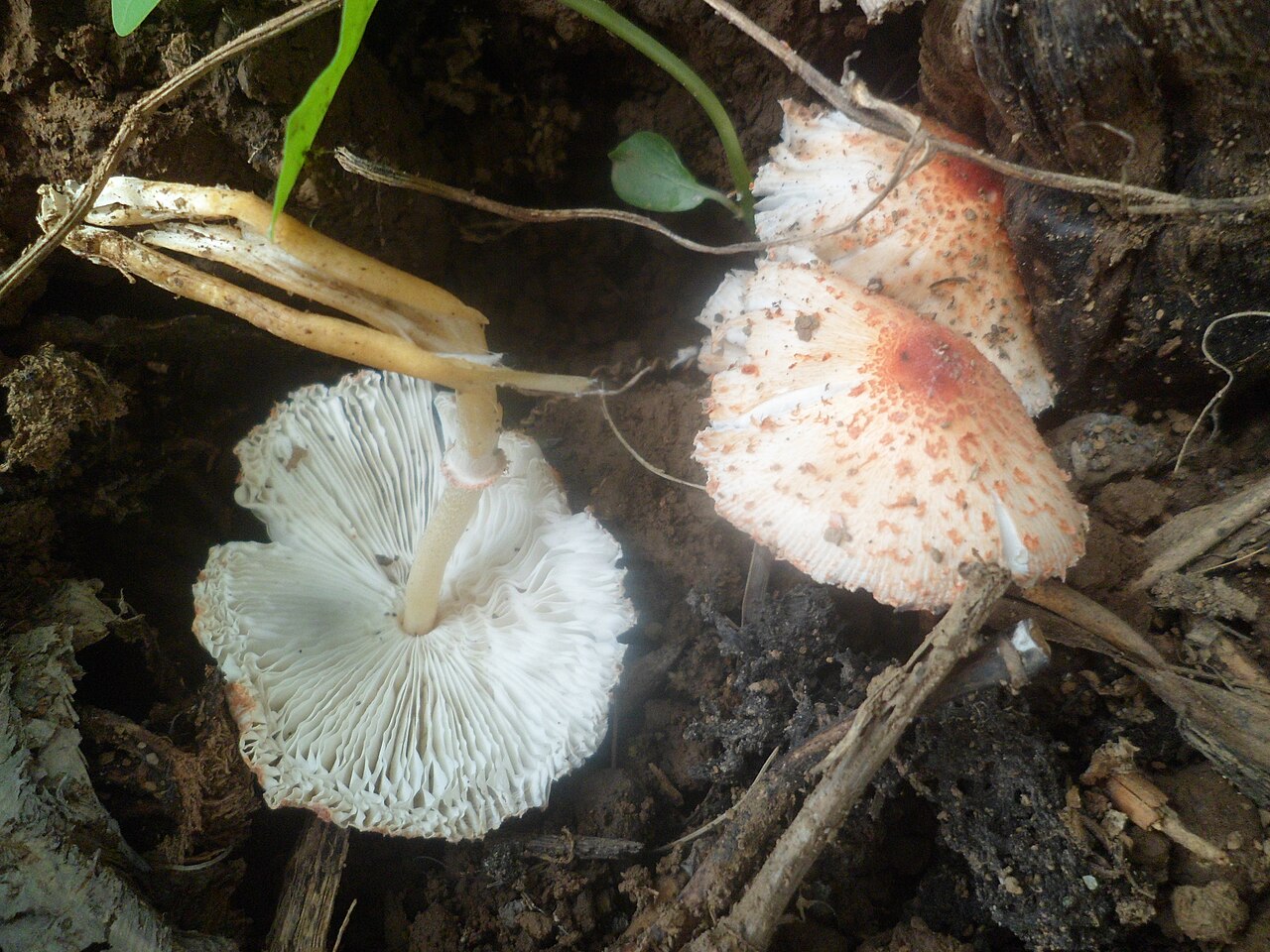
Photo: Chiranjivisubedi · CC BY-SA 4.0 · Photo source · License

Description
A small whitish dapperling with a brown centre and concentrically arranged brown scales, thin stem, fleeting ring and unpleasant smell.
Identification features
The cap is small, with a brown central boss and brown scales on a white background. Gills are white, crowded and free. The stem is thin and fragile; the delicate membranous ring may disappear quickly.
Identification checklist
Check the small fruitbody, brown central disc and fine brown scales on a white background, white free gills and very thin stem with a fleeting ring. The entire stem base must be visible.
Detailed features
- Cap
- A small whitish dapperling with a brown centre and concentrically arranged brown scales, a thin stem, fleeting ring and unpleasant smell.
- Hymenophore
- Gills are white, crowded and free.
- Stem
- The stem is thin and fragile; the delicate membranous ring may disappear quickly.
- Flesh
- White and thin.
- Smell
- Distinctly unpleasant and intrusive, especially in older fruitbodies.
- Spore print
- White.
Size
- Cap diameter
- 2–5 cm
- Stem height
- 5–6 cm
- Stem diameter
- 0,3–0,5 cm
Habitat
In woodland, parks, gardens and grassy places; from late spring to late autumn.
Fruiting period
May, June, July, August, September, October, November
Ecology
- Trophic mode
- Saprotrophic
- Substrate
- Soil, Grassland, Disturbed soil
- Notes
- Saprotrophic species. In woodland, parks, gardens and grassy places; from late spring to late autumn.
How to separate similar species
Small Lepiota species are very similar and include deadly poisonous mushrooms. Do not confuse them with large Macrolepiota parasols; size alone is insufficient, and small uncertain dapperlings should never be eaten.
Similar species
- Lepiota species DANGEROUS
Some small Lepiota species are deadly poisonous; size, scales or a ring alone are not sufficient for safe identification.
- Leucoagaricus species
- Macrolepiota species
Interesting facts
Did you know? Its small parasol-like appearance can be misleading; the genus Lepiota includes very dangerous species.