Species details
Spotted toughshank
Rhodocollybia maculata
Poisonous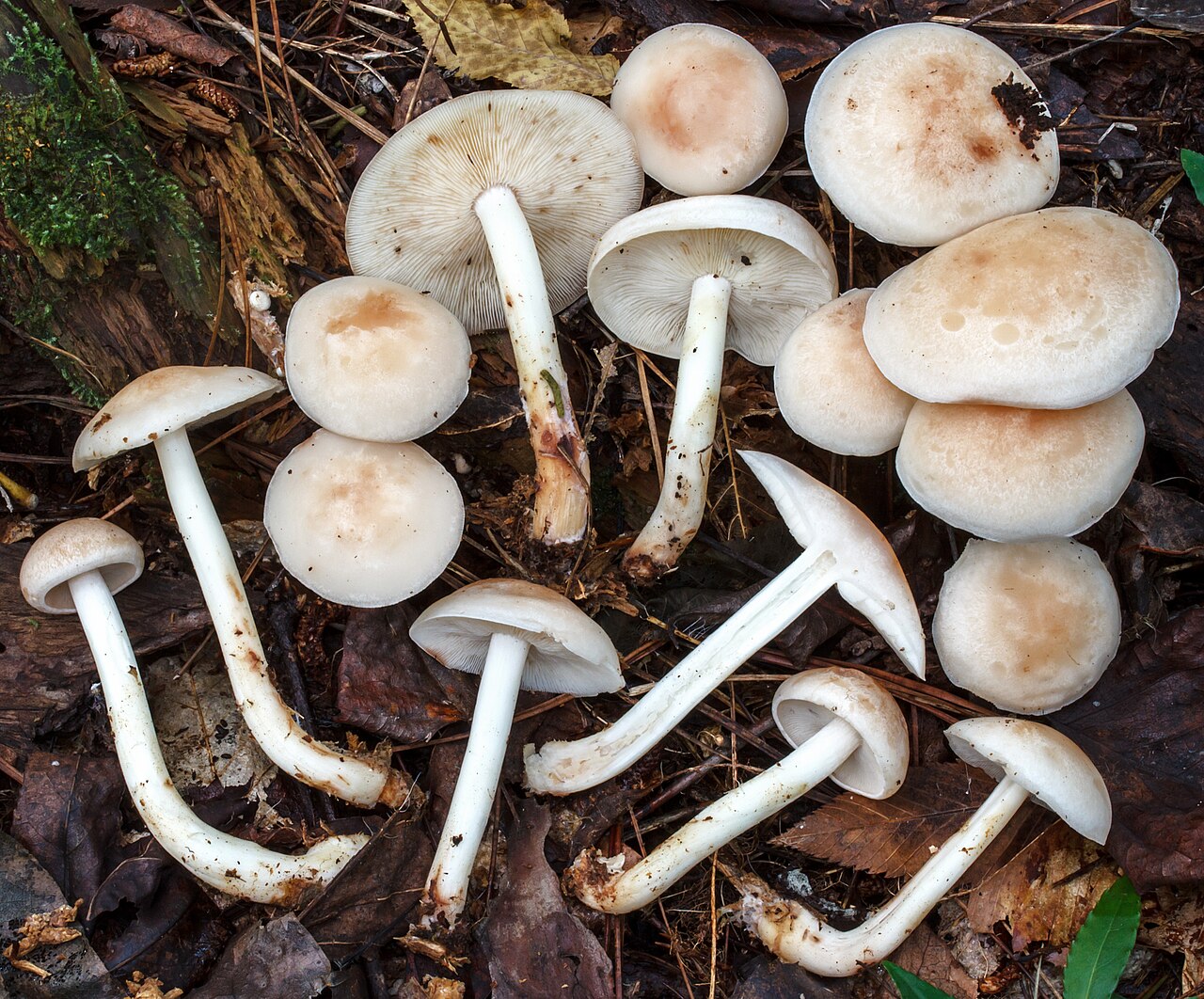
Photo: Jimmie Veitch (jimmiev) · CC BY-SA 3.0 · Photo source · License
_Singer_268480.jpg)
Description
An almost white mushroom with crowded gills and characteristic brown spots developing on cap, gills and stem.
Identification features
Gills are very crowded and narrow. The stem is firm, initially white and later brown-spotted. Flesh is white, firm and tough.
Identification checklist
Check the entire fruitbody for identification. An almost white mushroom with crowded gills and characteristic brown spots developing on cap, gills and stem. Gills are very crowded and narrow. The stem is firm, initially white and later brown-spotted. Flesh is white, firm and tough. Most often under spruce, singly or in larger groups; in autumn.
Detailed features
- Cap
- An almost white mushroom with crowded gills; characteristic brown spots gradually develop on the cap, gills and stem.
- Hymenophore
- Gills are very crowded and narrow.
- Stem
- The stem is firm, initially white and later brown-spotted.
- Flesh
- White, hard, firm and tough.
- Smell
- No distinctive smell.
- Spore print
- White.
Size
- Cap diameter
- ≤ 10 cm
- Stem height
- ≤ 10 cm
- Stem diameter
- ≤ 1 cm
Habitat
Most often under spruce, singly or in larger groups; in autumn.
Fruiting period
September, October, November
Ecology
- Trophic mode
- Saprotrophic
- Host trees
- Spruce (Picea)
- Substrate
- Forest soil, Leaf litter
- Notes
- Saprotrophic species. Most often under spruce, singly or in larger groups; in autumn.
How to separate similar species
Compare especially with: Rhodocollybia butyracea, Gymnopus species. A single feature or photograph is not sufficient for reliable identification.
Similar species
- Rhodocollybia butyracea
- Gymnopus species
Interesting facts
Did you know? As it ages, brown spots may develop over almost the entire fruitbody, a useful field clue.