Species details
Silky rosegill
Volvariella bombycina
Conditional / expert preparation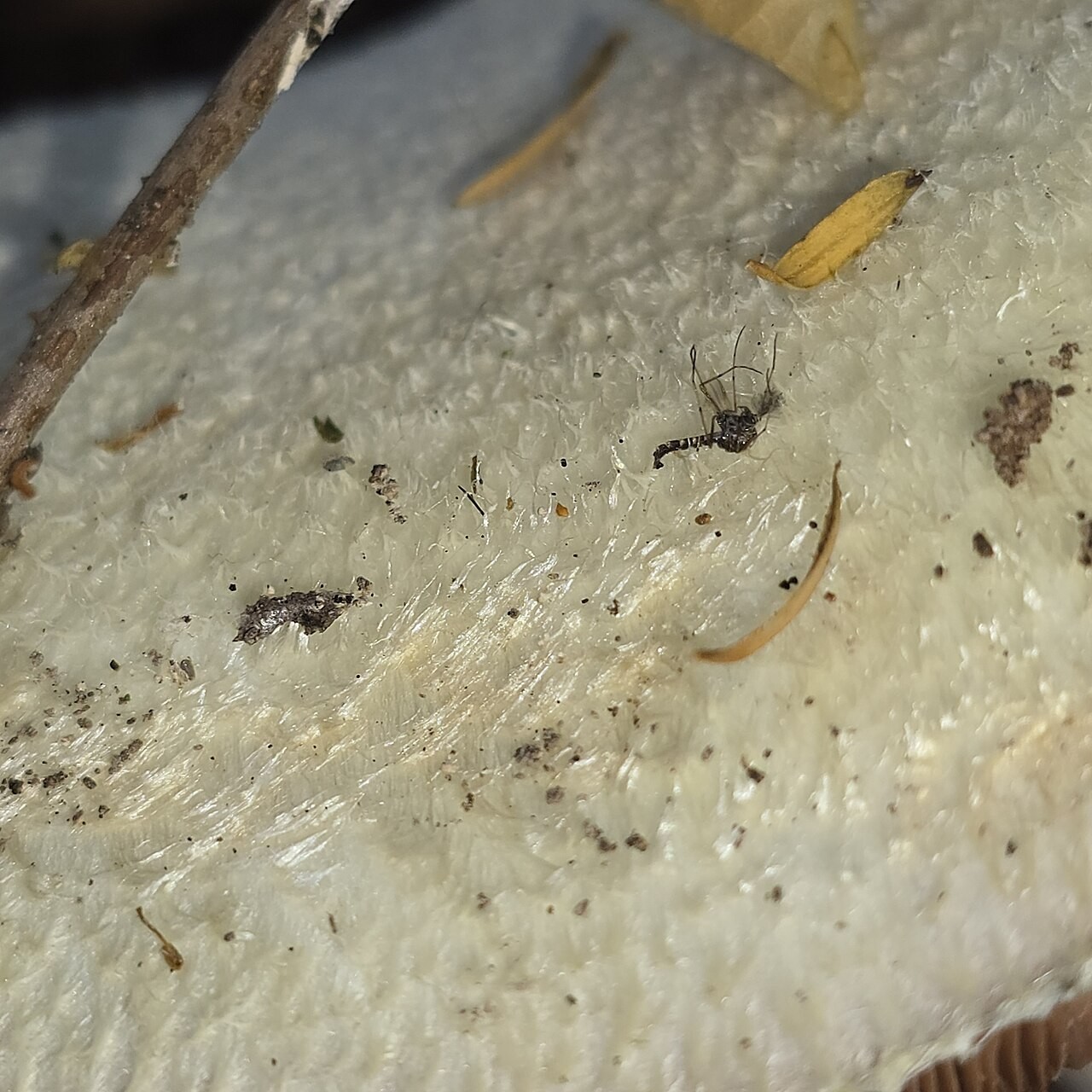
Photo: Inguzspirit · CC BY-SA 4.0 · Photo source · License

Description
A large white silky-fibrous rosegill with pink mature gills and a broad brownish volva at the base; grows on living hardwood.
Identification features
The cap is 5–20 cm wide, snow white, dry and silky-fibrous. Gills are free, white at first and later pink. The stem lacks a ring and arises from a broad membranous volva.
Identification checklist
Check growth directly from wood, silky white cap, pink mature gills, absence of a ring and the large volva.
Detailed features
- Cap
- The cap is 5–20 cm wide, snow white, dry and silky-fibrous.
- Hymenophore
- The gills are free, initially white and later pink.
- Stem
- The stem lacks a ring and arises from a broad membranous volva.
Size
- Cap diameter
- 5–20 cm
Habitat
Grows from cracks and cavities of living broadleaved trees, especially beech, elm, poplar and maple, in summer and autumn.
Fruiting period
June, July, August, September, October
Ecology
- Host trees
- Beech (Fagus), Poplar / aspen (Populus), Maple (Acer), Elm (Ulmus)
- Notes
- Grows from cracks and cavities of living broadleaved trees, especially beech, elm, poplar and maple, in summer and autumn.
How to separate similar species
White Amanita have white spore prints and usually different growth; pink spore print is a key clue in Volvariella.
Similar species
- Amanita species
- Volvopluteus gloiocephalus
- Pluteus species
Conservation
- Red list
- R – rare species
- Notes
- On the Slovenian Red List: R – rare species.