Species details
Sheep polypore
Albatrellus ovinus
Traditionally edible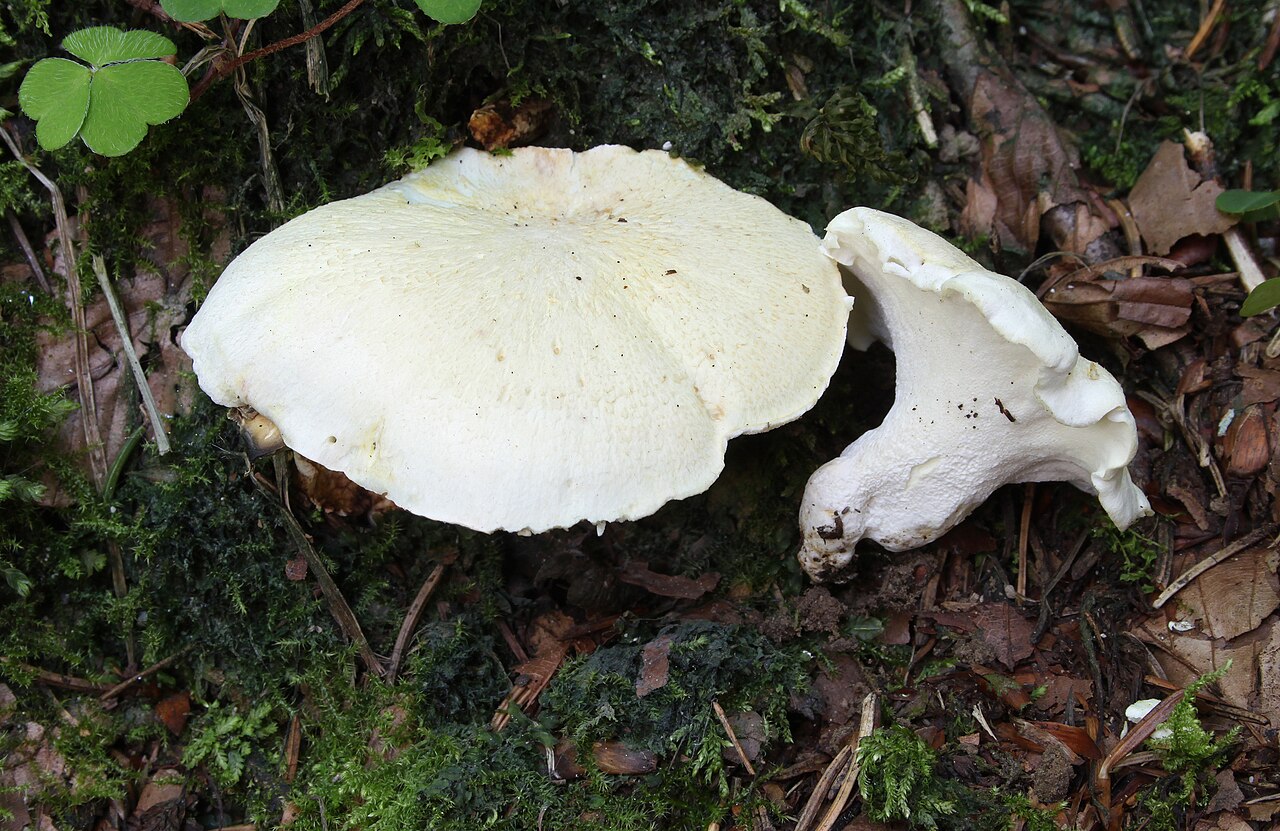
Photo: Holger Krisp · CC BY 3.0 · Photo source · License

Description
A pale, fleshy ground polypore with an irregular cap, often growing in groups and sometimes fused with neighbouring fruitbodies.
Identification features
The underside has fine white pores that yellow with age; the flesh is white and firm, becoming tougher in older specimens.
Identification checklist
Check the entire fruitbody for identification. A pale, fleshy ground polypore with an irregular cap, often growing in groups and sometimes fused with neighbouring fruitbodies. The underside has fine white pores that yellow with age; the flesh is white and firm, becoming tougher in older specimens. Typical habitat: Mainly coniferous and mixed woodland, often with spruce on the ground among moss and needle litter.
Detailed features
- Cap
- A pale, fleshy ground-dwelling fungus with an irregular cap, often growing in groups and sometimes fused with neighbouring fruitbodies.
- Hymenophore
- The underside has fine white pores that yellow with age; the flesh is white and firm, becoming tougher in older fruitbodies.
- Flesh
- White and firm, becoming tougher in older fruitbodies.
- Smell
- Mild to pleasant.
- Spore print
- White.
Size
- Cap diameter
- 7–18 cm
- Stem height
- 3–7 cm
- Stem diameter
- 1–3 cm
Habitat
Mainly coniferous and mixed woodland, often with spruce on the ground among moss and needle litter.
Fruiting period
July, August, September, October
Ecology
- Host trees
- Spruce (Picea)
- Substrate
- Forest soil
- Notes
- Mainly coniferous and mixed woodland, often with spruce on the ground among moss and needle litter.
How to separate similar species
Compare especially with these similar species: Albatrellus citrinus, Albatrellus subrubescens, Albatrellopsis confluens. Check the entire fruitbody, spore-bearing surface, stem, texture, changes after bruising and habitat. A single feature or photograph is not enough for reliable identification.
Similar species
- Albatrellus citrinus
- Albatrellus subrubescens
- Fused polypore (Albatrellopsis confluens)
Interesting facts
Did you know? Fruitbodies often grow close together and may fuse with one another.