Species details
Old man of the woods
Strobilomyces strobilaceus
Extra caution required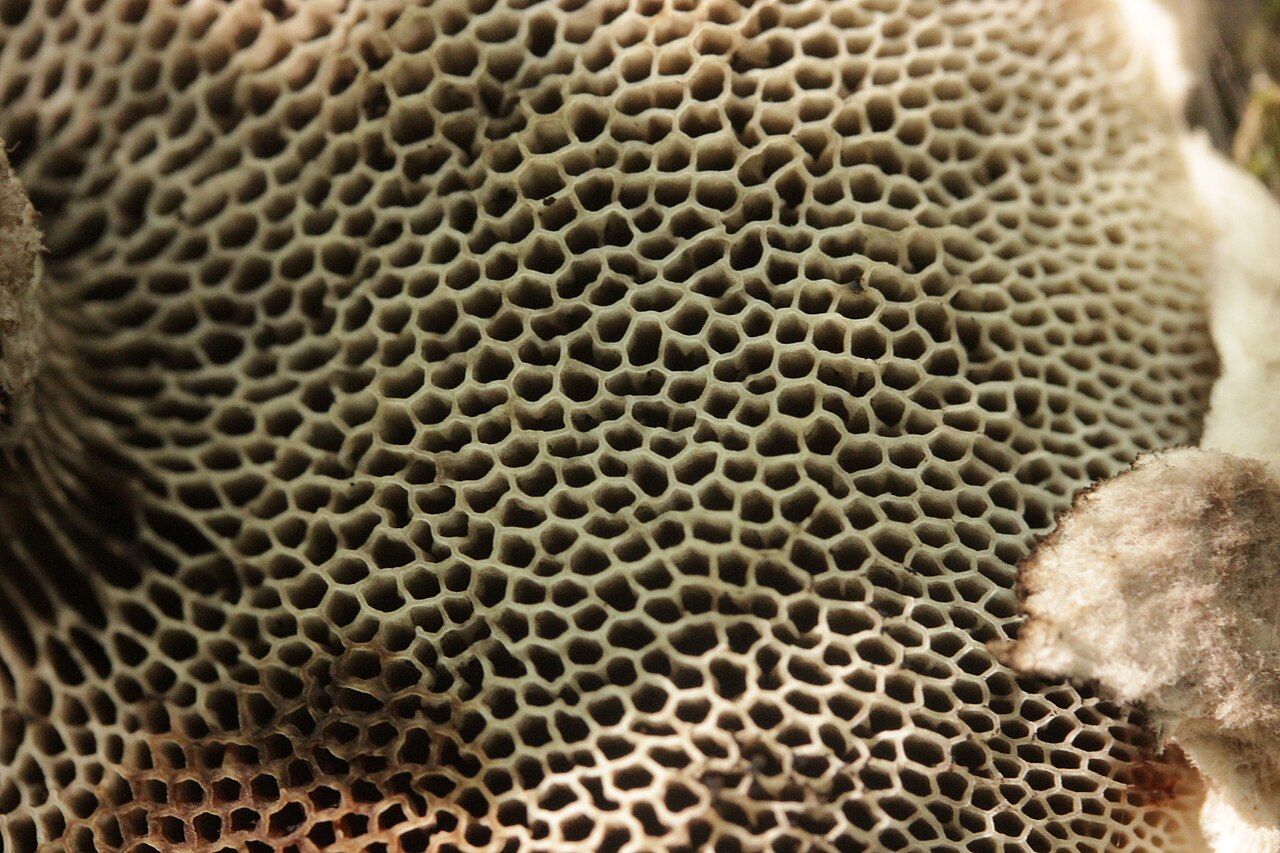
Photo: Holger Krisp · CC BY 3.0 · Photo source · License

Description
A distinctive dark bolete with large shaggy cap scales and grey-black pores.
Identification features
The flesh reddens when cut and later blackens; the stem is fibrous-scaly.
Identification checklist
Check the entire fruitbody for identification. A distinctive dark bolete with large shaggy cap scales and grey-black pores. The flesh reddens when cut and later blackens; the stem is fibrous-scaly. Typical habitat: Deciduous and mixed woodland, mainly with beech and oak.
Detailed features
- Cap
- Up to about 14 cm, grey to black-brown, covered in large coarse projecting scales.
- Hymenophore
- Pores start whitish to grey and later darken; young fruitbodies have a veil over them.
- Stem
- Up to about 10 × 2 cm, grey to black and fibrous-scaly.
- Flesh
- Initially pale, may redden when injured and then blacken.
- Smell
- Not distinctive.
- Spore print
- Dark brown.
Size
- Cap diameter
- 4–14 cm
- Stem height
- 4–10 cm
- Stem diameter
- 1–2 cm
Habitat
Deciduous and mixed woodland, mainly with beech and oak.
Fruiting period
July, August, September, October
Ecology
- Trophic mode
- Mycorrhizal
- Host trees
- Beech (Fagus), Oak (Quercus)
- Substrate
- Forest soil
- Soil
- Clayey
- Notes
- Occurs mainly in deciduous woodland on humus-rich to clayey soils.
How to separate similar species
Compare especially with these similar species: Strobilomyces confusus, Porphyrellus porphyrosporus. Check the combination of cap shape and colour, spore-bearing surface, stem, flesh changes and habitat. A single feature or photograph is not enough; if the key characters do not match the description, do not treat the identification as confirmed.
Similar species
- Strobilomyces confusus
A very close relative; scale details and microscopic characters are important for reliable separation.
- Porphyrellus porphyrosporus
Lacks the large coarse cap scales and is more uniformly dark.