Species details
Lentil shanklet
Collybia tuberosa
Inedible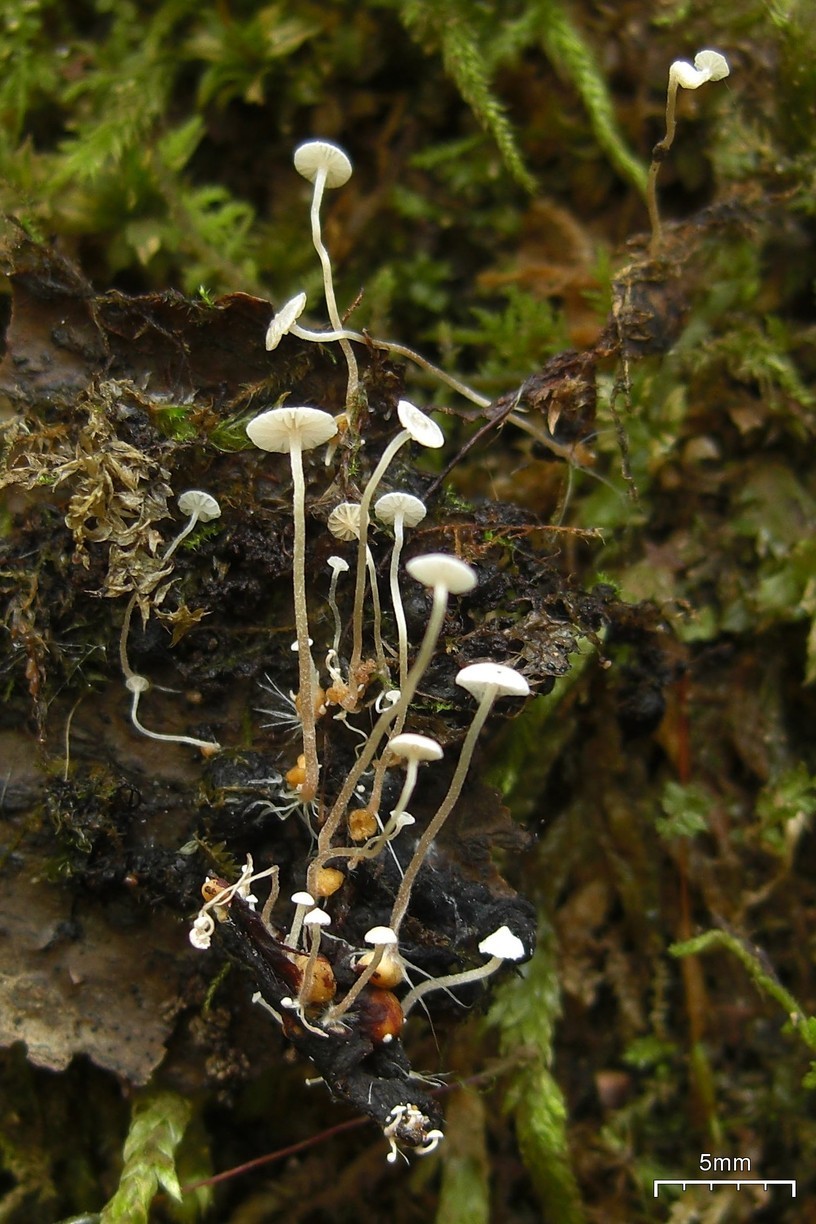
Photo: Jason Hollinger · CC BY 2.0 · Photo source · License
.jpg)
Description
A very small white gilled mushroom growing on decaying fruitbodies of other fungi, with a characteristic reddish-brown sclerotium at the base.
Identification features
The cap is only 0.5–1.5 cm wide, whitish, thin and later almost flat. Gills are white and crowded. The very thin whitish to brownish stem arises from a small reddish-brown sclerotium.
Identification checklist
Look for a very small white fruitbody on remains of another mushroom and check for the reddish-brown sclerotium at the stem base.
Detailed features
- Cap
- The cap is only 0.5–1.5 cm wide, whitish, thin and later almost flat.
- Hymenophore
- The gills are white and crowded.
- Stem
- The very thin whitish to brownish stem arises from a small reddish-brown sclerotium.
Size
- Cap diameter
- 0,5–1,5 cm
Habitat
Grows in summer and autumn on old decaying and blackened fruitbodies of gilled mushrooms, especially larger milkcaps and brittlegills.
Fruiting period
August, September, October
Ecology
- Notes
- Grows in summer and autumn on old decaying and blackened fruitbodies of gilled mushrooms, especially larger milkcaps and brittlegills.
How to separate similar species
Collybia cookei has a yellow to ochre sclerotium and may appear to grow from soil. Sclerotium colour and shape are important.
Similar species
- Collybia cookei
- Collybia cirrhata
- Mycena species