Species details
Common bonnet
Mycena galericulata
Inedible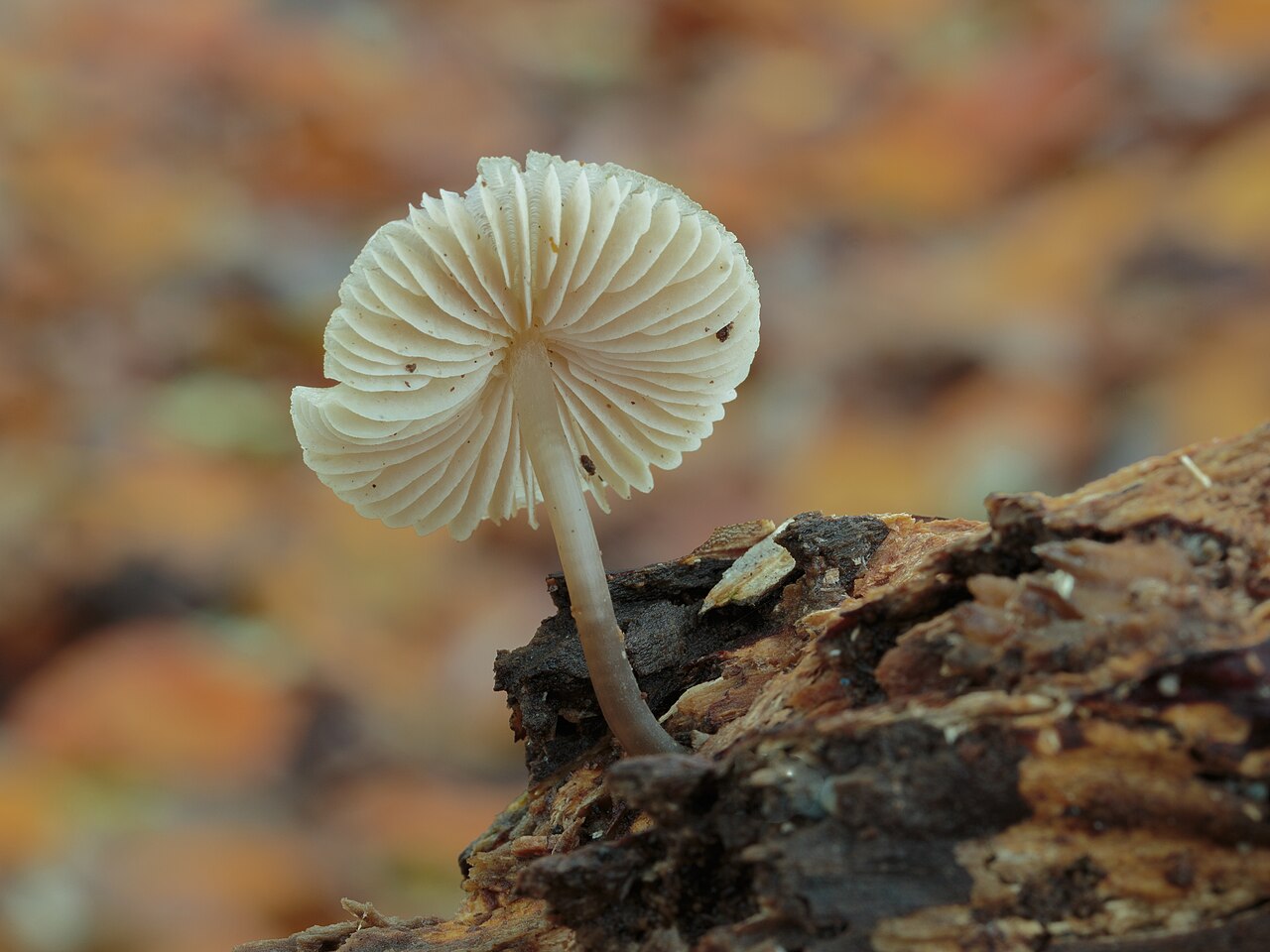
Photo: Dominicus Johannes Bergsma · CC BY-SA 4.0 · Photo source · License
_(d.j.b.)_06.jpg)
Description
A grey to flesh-brown bonnet mushroom with a ridged cap and gills that become pinkish with age.
Identification features
Gills are initially whitish, later pink and fairly broad. The stem is thin and tough, initially whitish and later brownish.
Identification checklist
Check the entire fruitbody for identification. A grey to flesh-brown bonnet mushroom with a ridged cap and gills that become pinkish with age. Gills are initially whitish, later pink and fairly broad. The stem is thin and tough, initially whitish and later brownish. Most often on stumps and decaying hardwood; from spring to late autumn.
Detailed features
- Cap
- A grey to flesh-brown bonnet mushroom with a grooved cap and gills that develop a pinkish tint with age.
- Hymenophore
- The gills are initially whitish, later pinkish and rather broad. The stem is thin and tough, initially whitish and later brownish.
- Flesh
- Whitish to brownish and thin.
- Smell
- Mild mealy smell.
- Spore print
- White.
Size
- Cap diameter
- 2–6 cm
- Stem height
- 4–8 cm
- Stem diameter
- 0,2–0,3 cm
Habitat
Most often on stumps and decaying hardwood; from spring to late autumn.
Fruiting period
March, April, May, June, July, August, September, October, November
Ecology
- Trophic mode
- Saprotrophic
- Host trees
- Beech (Fagus), Birch (Betula)
- Substrate
- Stumps, Dead hardwood
- Notes
- Saprotrophic species. Most often on stumps and decaying hardwood; from spring to late autumn.
How to separate similar species
Compare especially with: Mycena inclinata, Mycena species. A single feature or photograph is not sufficient for reliable identification.
Similar species
- Clustered bonnet (Mycena inclinata)
- Mycena species
Interesting facts
Did you know? The gills often develop a pinkish tone in older fruitbodies, a useful supporting character.