Species details
Blackening waxcap
Hygrocybe conica
Poisonous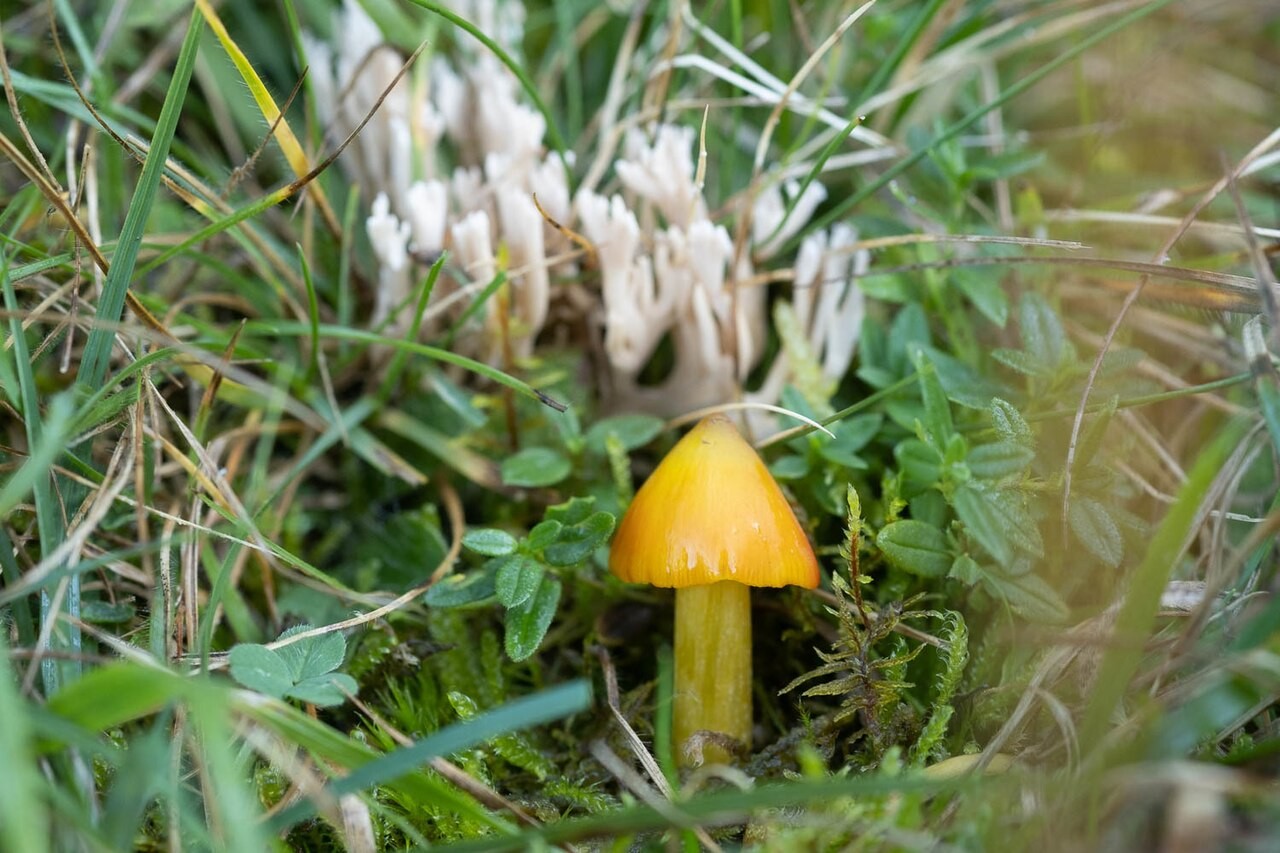
Photo: Enrico Tomschke · CC BY 4.0 · Photo source · License

Description
A bright yellow to orange-red waxcap with a sharply conical cap that blackens strongly with age or damage.
Identification features
The cap is conical, smooth, and often shiny. Gills are yellowish, broad, and spaced. The stem is yellow to orange, hollow, and fibrous; cap, gills, and stem blacken when damaged or old.
Identification checklist
Key features are the sharply conical cap and strong blackening of all parts. Also check the white spore print, spaced gills, and grassland habitat.
Detailed features
- Cap
- The cap is conical, smooth, and often shiny.
- Hymenophore
- Gills are yellowish, broad, and spaced.
- Stem
- The stem is yellow to orange, hollow, and fibrous; cap, gills, and stem blacken when damaged or old.
- Flesh
- Yellowish, thin and brittle; blackening with age or damage.
- Smell
- No distinctive smell.
- Spore print
- White.
Size
- Cap diameter
- 3–5 cm
- Stem height
- 5–10 cm
- Stem diameter
- 0,5–0,8 cm
Habitat
In meadows, pastures, lawns, and other nutrient-poor grassland, often among moss, mainly in late summer and autumn.
Fruiting period
August, September, October
Ecology
- Trophic mode
- Saprotrophic
- Substrate
- Grassland, Moss
- Notes
- In meadows, pastures, lawns, and other nutrient-poor grassland, often among moss, mainly in late summer and autumn.
How to separate similar species
Other red and yellow waxcaps can look similar, but some do not blacken. Identification from a photo of a young undamaged specimen may be unreliable.
Similar species
- Scarlet waxcap (Hygrocybe coccinea)
- Hygrocybe acutoconica
- Crimson waxcap (Hygrocybe punicea)
Interesting facts
Did you know? Blackening of cap, gills and stem with age or damage is one of its most distinctive characters.